
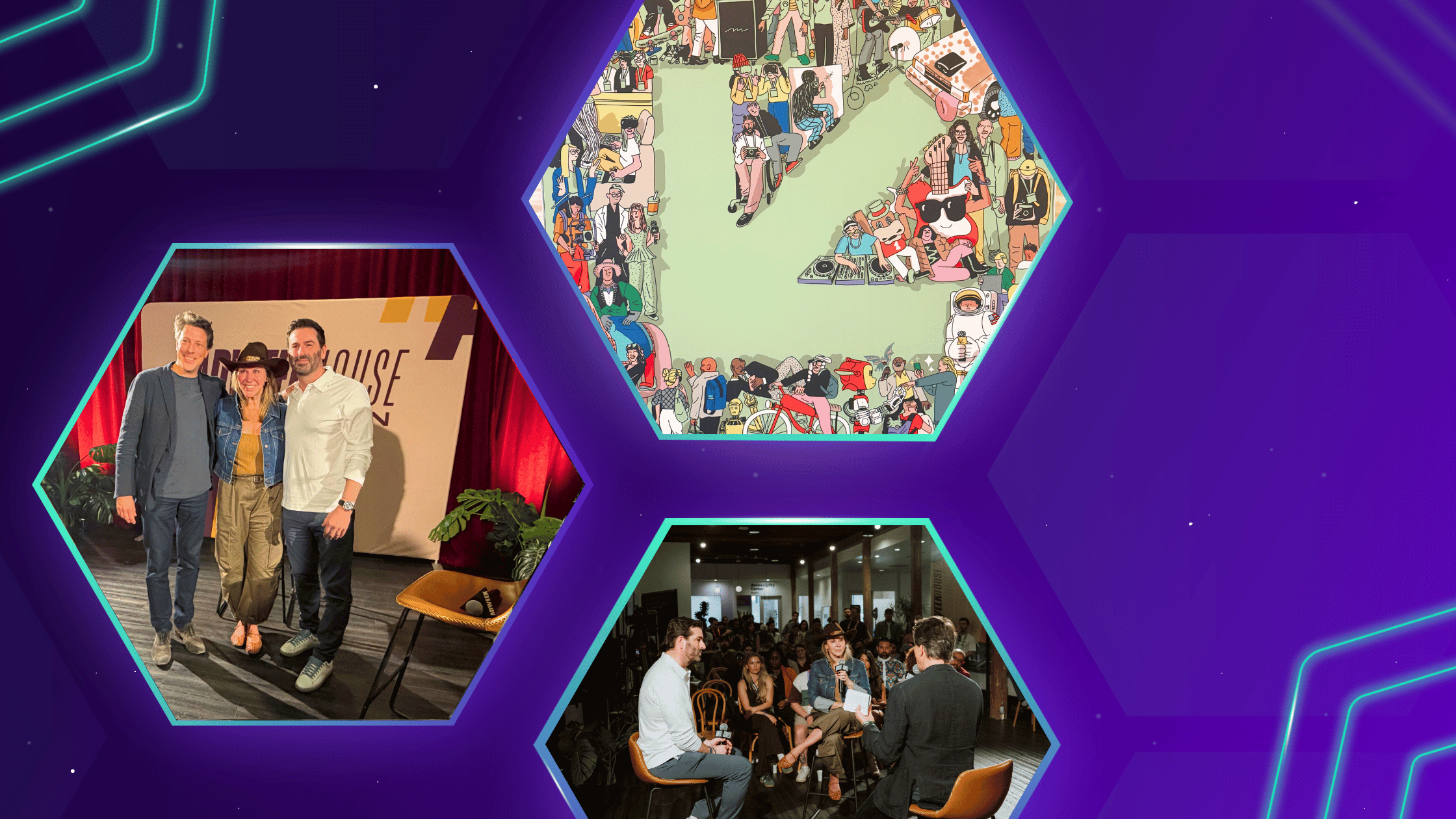
SXSW 2026: PulsePoint Curates Health Marketing Discussion at ADWEEK House
SXSW 2026 didn’t feel like any sort of traditional conference, it felt like wandering through a living, breathing citywide advertising experiment. With the Austin Convention Center demolished, the festival spilled into every corner of downtown, turning Austin into a sprawling, unpredictable choose-your-own-adventure. One minute you were ducking into a panel on turning passions into sustainable businesses, the next you were getting a free haircut at a Peaky Blinders Netflix pop-up, hopping into the front seat of a Rivian to climb hills made with recycled asphalt, or getting water from a Tesla robot.
The reality was that every single person likely left SXSW with a unique experience entirely depending on the street you walked down. Somewhere along the way, and for a first-time attendee, it became crystal clear that SXSW is a giant collision of brand activations from the biggest names in tech, culture, film, and health. The entire conference is ultimately an immersive marketing landscape where brands try to grasp attention and craft stand-out experiences to make a lasting impression.
As I’ve recapped the week to family and friends, it’s become clear that if you weren’t there it’s almost impossible to explain how it all fits together.
In the backdrop of the hodgepodge that is SXSW, PulsePoint wanted to curate an intimate and important healthcare marketing conversion with some of the biggest marketing names in healthcare. The topic was around how we can reliably create a better and more unified healthcare narrative to align HCP and DTC audiences and drive brand influence.
The panel, titled Rx for Credibility: Designing a Unified Health Narrative featured these rockstar speakers:
- Andrea Palmer, CEO, Publicis Health Media
- Jason Young, Head of Marketing Strategy, Novartis
- Moderated by Konrad Gerszke, CEO, PulsePoint
Here are five core takeaways from the panel conversation:
1. Fragmentation is here to stay and that’s not a bad thing
In the past you could pretty carefully predict how much time people spent with different channels and plan investments accordingly, but times have changed. The reality is that today patients and doctors conduct their own research jumping between Google results, TikTok reels, Reddit threads, YouTube videos, and AI tools. The new marketing ecosystem is fragmented, but that’s the reality of modern media, not a flaw to fix.
“Fragmentation is going to continue… every hour there’s something new,” Andrea explained.
However, this fragmentation is not a bad thing, it just is just requiring marketers with a different opportunity. It’s more about finding the right points on the right channels to help move people through to the next stage.
2. Pay close attention to contradiction across touchpoints
With this fragmentation, healthcare marketers must pay attention to inconsistencies in their narratives. What breaks trust is when the information they encounter doesn’t line up, when messaging varies by channel, source, or moment in the journey.
“The challenge lies in the contradiction that could occur within that fragmentation,” Jason explains.
A patient might hear one thing from a creator, another from search, and something entirely different from their doctor. That contradictory piece of information can create hesitation and slow behavior change.
“If they're not getting the right information at the right time and in fact getting, conversely, misinformation, it erodes trust,” Jason explained. “The more you erode trust, the more it works against changing the behavior.”
Ultimately, this just means that marketers need to ensure they have tight alignment in their messaging across touchpoints and audiences.
3. Discovery is constant and brands have to show up differently
The idea of a linear funnel is largely outdated in our new fragmented environment. Patients aren’t moving from awareness to consideration to action in clean steps, they’re looping, revisiting, and discovering continuously.
“People are on this never-ending journey of discovery,” Andrea explains.
That means every interaction, every search, scroll, or question asked to an AI chatbot, is a moment that can either help influence a behavior change or stall them completely. Because of this, it’s important to move beyond how many people you can reach.
“It’s not really about reach anymore… it’s about… each and every one of those moments of discovery.”
The brands that stand out aren’t just present, they’re helpful in the right context, with the right message, at the right moment.
4. Storytelling is the differentiator
There’s no shortage of data in healthcare marketing. If anything, as the panelists noted, there’s too much of it. We have signals, segments, behaviors, and insights that are only part of the equation in marketing.
The reality is that data alone doesn’t change behavior. People don’t act on statistics, they act on understanding, relatability, and emotion.
“People don’t remember marketing campaigns. They remember stories… and how it made them feel,” Andrea said.
In a category as complex as healthcare, storytelling becomes the way to create something memorable and serves as the bridge between information and action. Ultimately, the competitive edge for brands isn’t just better targeting, it’s better storytelling too.
Jason expands on this point later in the panel, stating that at Novartis they are working to convert science and messaging into deep, impactful narratives because in the age of AI, “it's in the moment where there's a human touch,” that helps bring patients to the right treatment.
5. AI is rewriting search and brand narratives
One of the biggest shifts discussed was how AI is fundamentally changing how people search for and consume health information. Queries are becoming more conversational, more specific, and more revealing.
That added context gives a clearer picture of intent, but it also changes who controls the narrative. Increasingly, patients aren’t hearing directly from brands anymore, they’re hearing it from AI summaries or chatbots.
“The end user isn’t getting that information directly from the brand… they’re getting it via the LLM,” Jason explained.
Which introduces a new layer of complexity: brands now have to ensure their information is not only accurate, but also accessible, interpretable, and prioritized by these systems. “You’ve got to let go of your brand a little bit,” Jason said. “It's about getting patients to diagnosis and treatment. Then hopefully you can pull that through at the point of care.”
The Bottom Line
Fragmentation and AI are here to stay, but that presents this positive opportunity for marketers. The new channels mean that patients are always on, always learning, giving marketers many touchpoints to get the right message in front of them. However, panelists caution that those narratives must be human and deeply aligned in order to drive true behavior change.
.jpeg)


